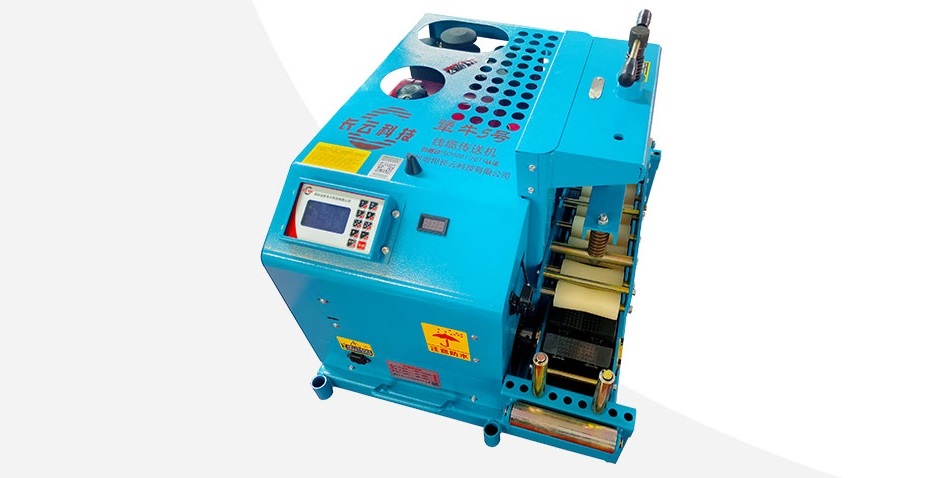
The right cable conveyor speed is the speed that suits the cable, the route and the rest of the installation system. A higher maximum on a specification sheet is not automatically a better choice. Start by distinguishing a listed fixed output from an adjustable range, then confirm the operating conditions for the actual supplied machine.
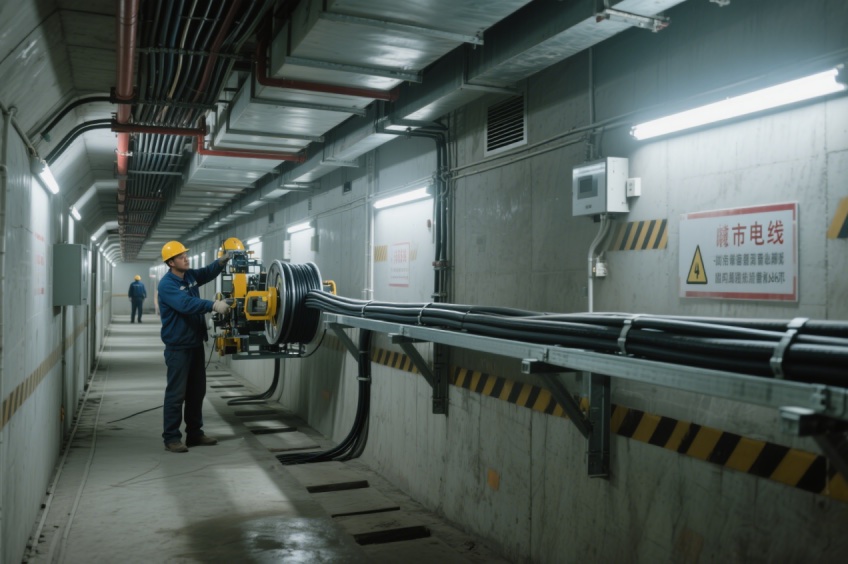
A cable pusher feeds cable along an installation route. Its speed must be considered alongside drum payout, any pulling winch, intermediate feeders and the people monitoring the route. There is no single speed in metres per minute that is suitable for every cable installation.
Compare real model specifications
| Model | Published conveying speed | What to establish before ordering |
|---|---|---|
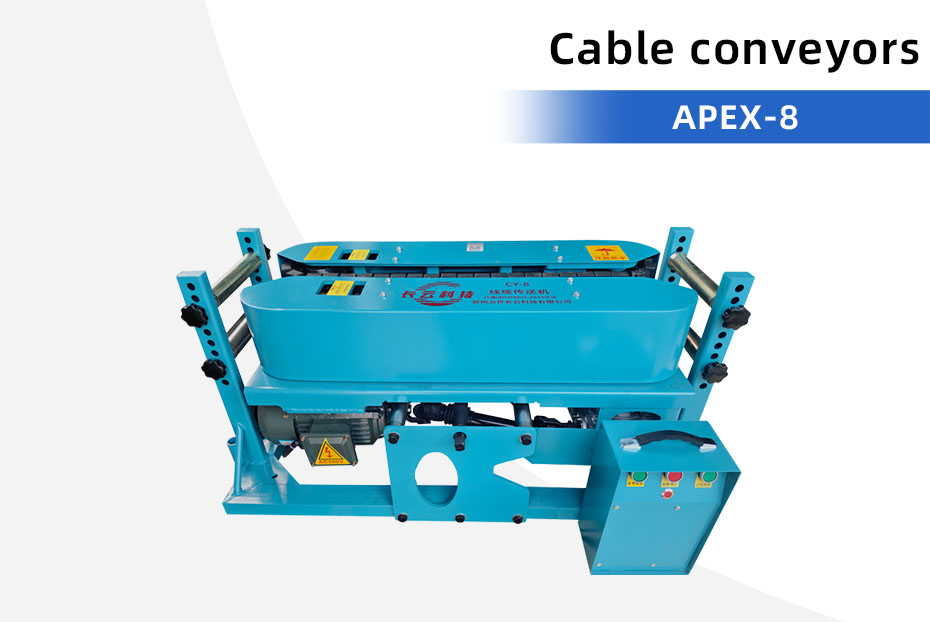
| APEX-8 | 19.2 m/min | The supplied control arrangement and whether its listed output fits the planned line |
| Conveyor 400 | 26 m/min, constant speed | Compatibility of a switch-controlled fixed-speed unit with adjoining equipment |
| Gecko Series | 3–12 m/min | The required working range and mounting configuration for the tray route |
| LayPro 900 Double voltage | 4–36 m/min | Adjustment method and performance at the proposed working setting |
These are published model specifications, not a recommendation to operate your cable at those speeds. Confirm the exact version in the order. A range also does not mean that every load is available at every setting.
When is fixed speed worth considering?
A fixed-speed conveyor may be considered when the planned operation can accommodate its output and the supplier confirms a compatible control arrangement. The purchasing question is not simply whether fixed speed is cheaper: ask how the machine will start, stop and work alongside the drum and other equipment.
Do not assume that changing supply voltage or adding an unspecified external controller is an approved way to slow a fixed-speed unit. Request a manufacturer-approved configuration if speed adjustment is necessary.
What does variable speed add?
An adjustable range gives a setting to discuss when different route sections or equipment combinations require different feed rates. Establish the minimum and maximum for the quoted configuration, how settings are selected and what operating limits apply under load. A label such as “stepless” or “multi-speed” does not by itself confirm remote control, feedback control or compatibility with other machines.
For the Gecko, for example, the 3–12 m/min specification and listed synchronized-control option are separate facts. Ask which controllers, cables and machine versions are needed for the proposed linked arrangement.
Check coordination across the whole line
If one machine delivers cable faster than the next section accepts it, the route needs attention before continuing. Conversely, feeding too little cable can change conditions elsewhere in the line. The operating plan should address these possibilities rather than treating every machine as an isolated purchase.
- Document the drum payout arrangement and the route to the first feeder.
- Identify each machine’s working range and the proposed setting.
- Confirm which units can be linked and which require individual operation.
- Agree how a stop at one location is communicated and handled by the whole crew.
- Request commissioning instructions for the complete supplied configuration.
For a system using both pushing and pulling equipment, see our cable pusher versus cable pulling winch guide. Do not infer electrical compatibility from similar product names or connectors.
Why maximum speed does not predict project duration
Dividing route length by a catalogue speed gives a theoretical uninterrupted movement time, not the installation schedule. Positioning equipment, preparing the drum, managing bends, checking the cable and relocating equipment all affect the job. Avoid choosing a conveyor solely from an assumed hours-saved calculation.
Cable handling constraints also remain relevant at any speed. Southwire’s cable installation calculation resources address pulling tension, sidewall pressure and other route considerations; a speed setting does not replace those checks. Obtain the cable manufacturer’s installation limits and have the route reviewed by the responsible installation team.
Speed questions to put in the purchase order
Ask the supplier to state the model and version, fixed speed or adjustable range, control method, supply requirements, linked-control scope and commissioning documentation. Describe your cable diameter and weight per metre, route length, bends, tray or duct arrangement, and other machines already on site.
Should I buy the fastest model?
Not on speed alone. Select a configuration that can work within the cable limits and the coordinated operating plan.
Can different conveyor models work together?
Do not assume so. Ask the supplier to confirm both speed compatibility and control compatibility for the named machines.
Send your cable and route details for a configuration quote, or compare the cable conveyor range. Include your intended working speed and ask which part of the specification supports that requirement.