For a cable replacement project, check the condition and usable space of the existing route before ordering a cable pusher. The fact that the old cable fitted is not evidence that the replacement cable, pulling attachment or feed arrangement will fit. Use the new cable datasheet and a verified route survey to put both the removal and installation scopes in writing.
Survey the route as it exists today
Mark each section as reusable, requiring work, or still unverified. Record the available duct or tray geometry, bends, access chambers, obstructions, and locations that will remain occupied. Note which dimensions were measured and which came from drawings. Where the route cannot be inspected, ask the owner to specify what proof of suitability is required before mobilization.
The cable data package should include outside diameter, mass per unit length, sheath material and the installation limits issued by the cable manufacturer. A nominal duct diameter or an old cable drawing cannot replace those records. Southwire’s cable installation references provide background on pulling checks; apply the limits for the supplied cable and the approved project design.

Treat removal and installation as separate work packages
Ask who owns the removal method, the condition assessment of the outgoing cable, and the decision to reuse the route. Then ask who supplies the equipment for the incoming cable. Avoid quoting one conveyor as the answer to both operations unless the supplier has reviewed both scopes and stated its role in each.
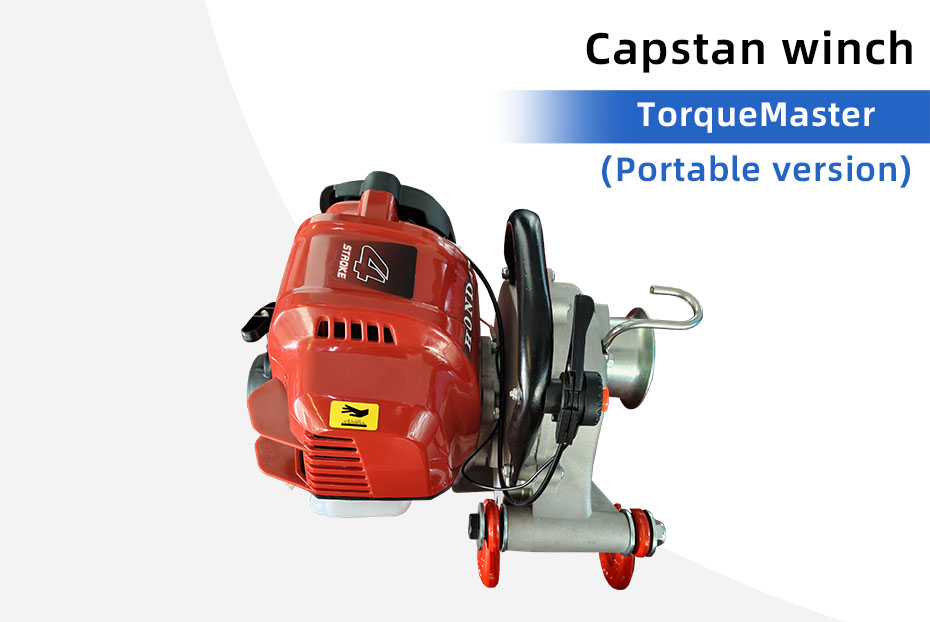
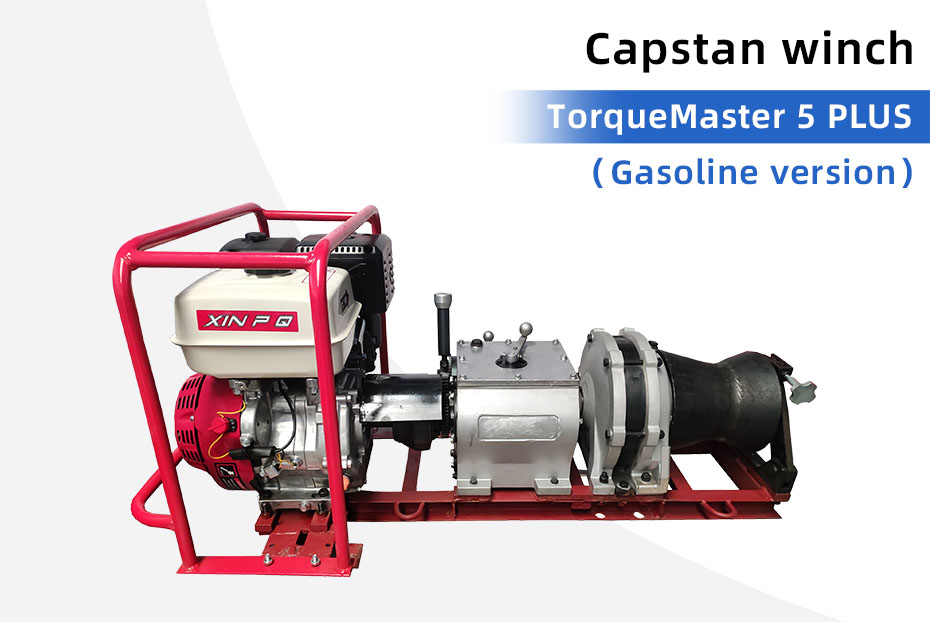
Do not assume the outgoing cable can serve as the pulling line for the replacement. The project team must approve the sequence, attachments, and equipment before work begins. Circuit identification, isolation, and coordination with any adjacent live services belong to the site owner and authorized electrical personnel.
Check the feed-in position after the old cable is removed
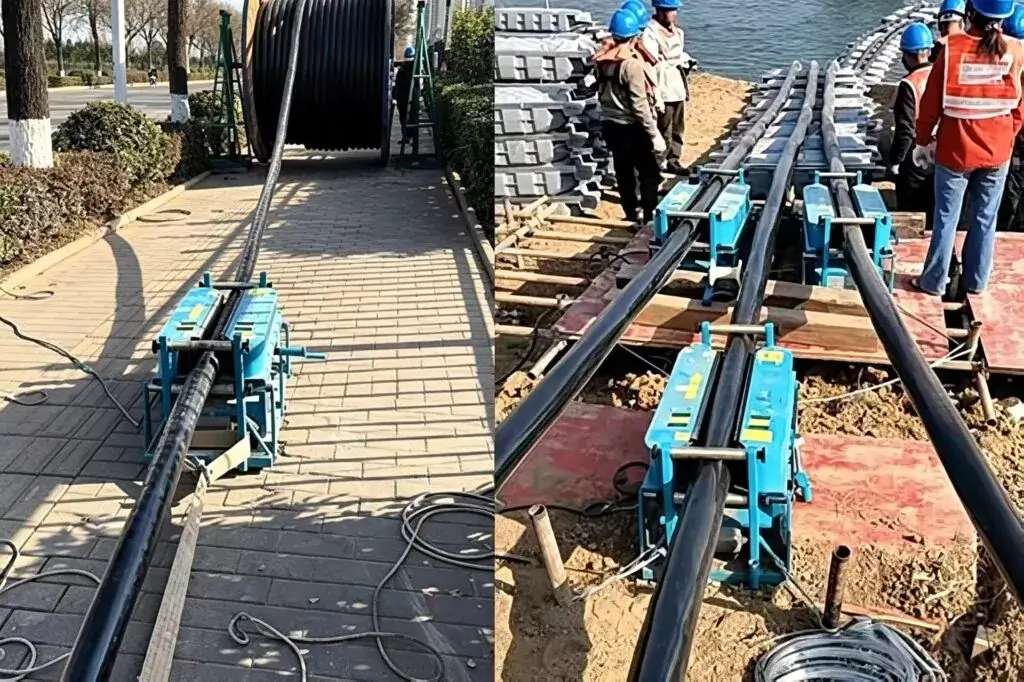
Draw the drum location, access opening, approach path, direction of travel and cable supports. Confirm that the conveyor can reach its assigned position and that there is working space around the machine at the intended cable entry angle. Ask the engineer to review the complete entry path against cable bending and tension limits, including the transition between the guides and the duct.
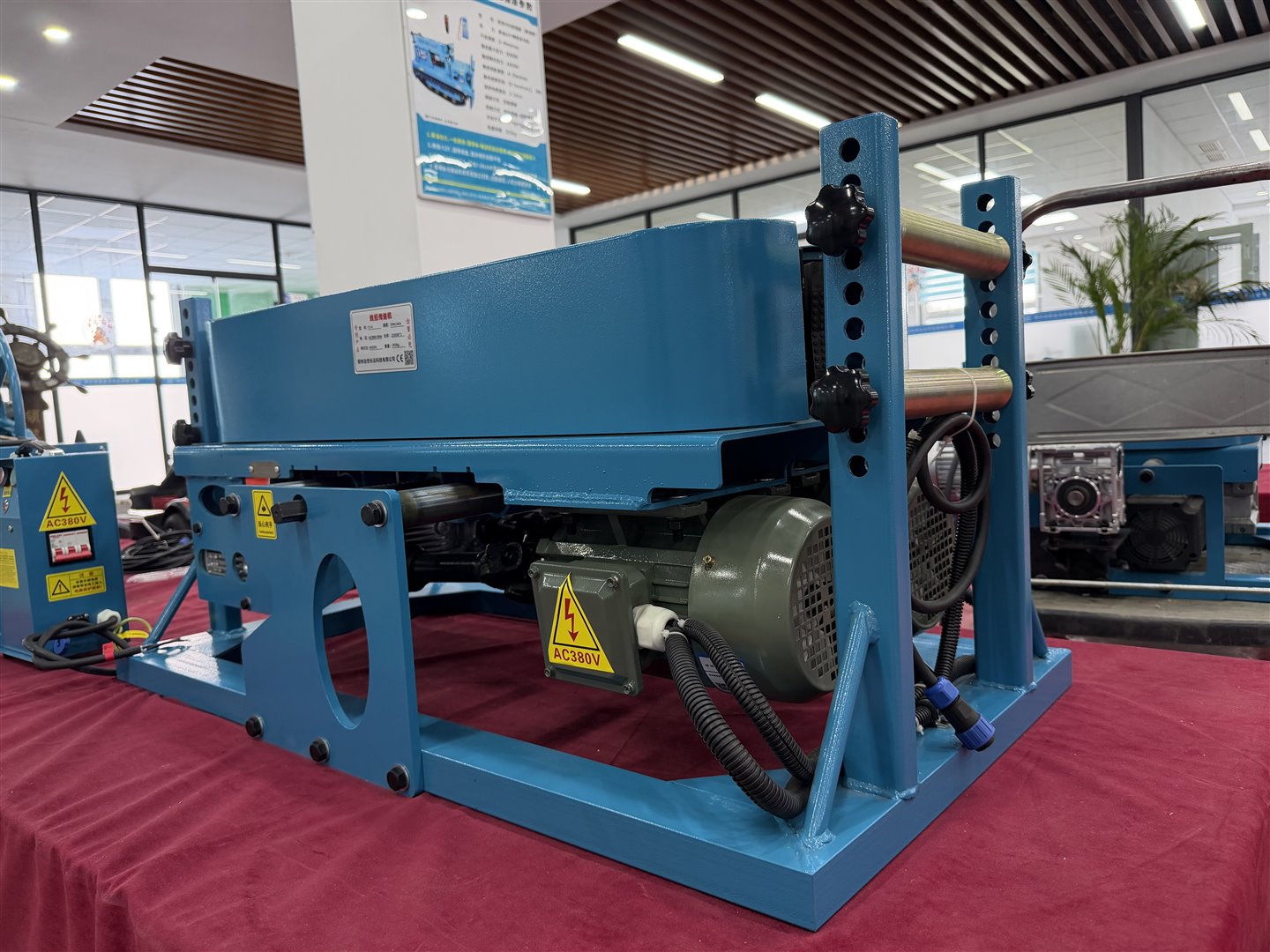
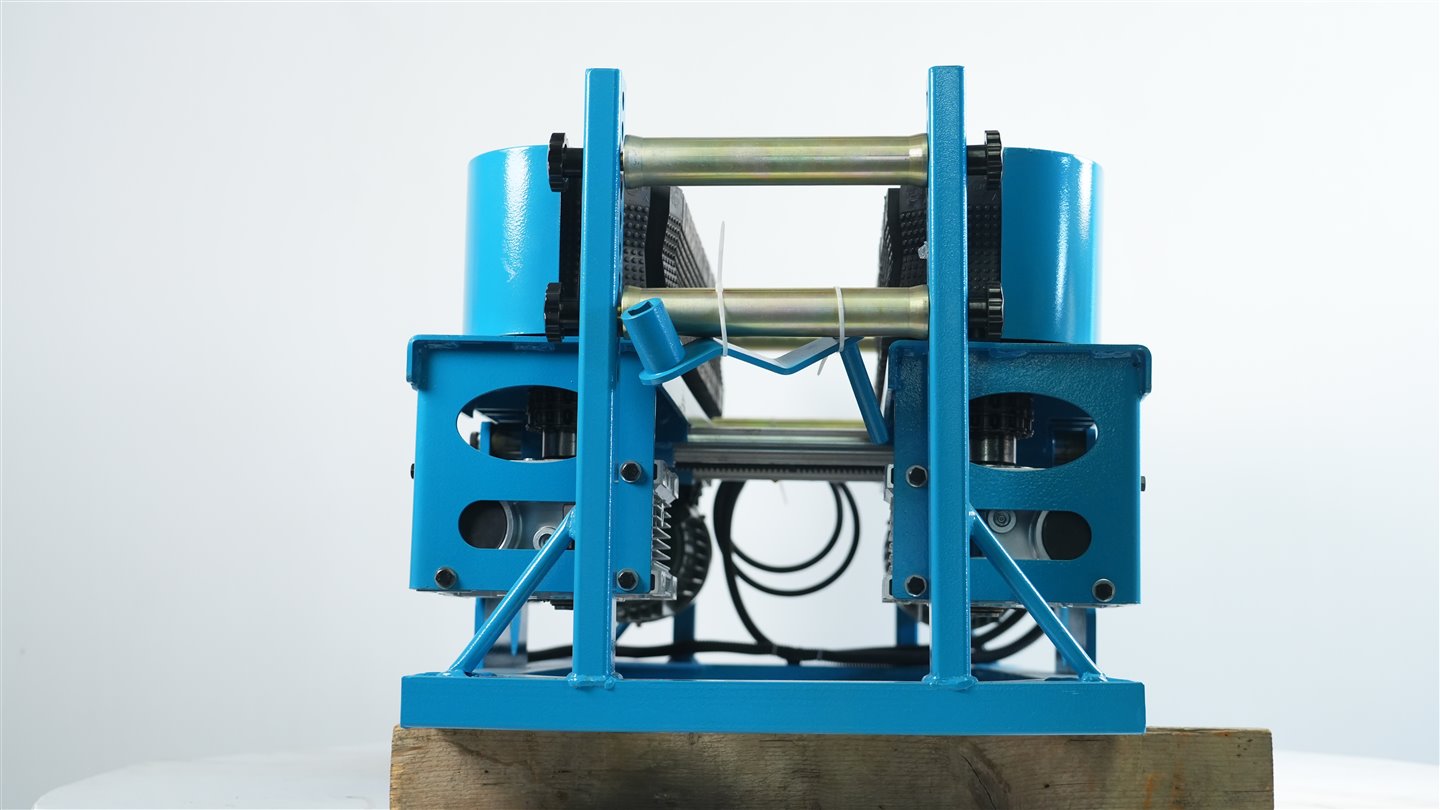
The APEX-8 is one example to review at a proposed feed point. Its published net weight and dimensions are inputs for checking delivery access and equipment support. Its cable size range does not establish duct clearance. If a more compact layout is needed, compare the supplied dimensions and contacts of the 900 Mini against the same drawing.
Write down the outage handover conditions
| Gate | What to confirm | Evidence to retain |
|---|---|---|
| Before removal | Approved scope, circuit identification, access and work restrictions | Owner’s authorized work package |
| After removal | Condition and usable route dimensions; issues needing repair or review | Marked-up route drawing and condition record |
| Before new installation | Proposed machine locations, case-specific cable limits, controls and power | Reviewed method and supplier configuration sheet |
| Before release | Assigned inspections, documentation and unresolved items | Project handover record |
If an obstruction or unexpected bend is found, document it and follow the project’s change and stop-work procedure. An outage deadline is not a substitute for checking a route change. The cable pusher route-planning checklist helps identify what needs to be reassessed when an access point or machine location changes.
Build a quote package the supplier can review
Send the new cable datasheet, a marked-up route drawing, photographs of access points, the intended installation sequence and available supply information. State which scope the conveyor is intended to support, where a winch or other equipment is planned, and who approves the arrangement. Ask for a quotation that separates machines, controllers, guides, documentation and any exclusions.
Request a cable replacement equipment quote. Attach the route drawing and cable datasheet so the response can address the work you actually plan to perform.