Match a cable pusher to the cable’s actual outside diameter and construction, then confirm the drive surfaces and pressure adjustment are suitable for its jacket. A cable being inside the advertised diameter range is an initial check, not complete approval for installation.
Use the cable manufacturer’s datasheet together with the equipment documentation. This guide explains how to prepare a compatibility enquiry for power cable conveyors without confusing conductor size, cable diameter and allowable force.
Outside diameter and conductor area are different measurements
Conductor cross-sectional area is normally expressed in mm². Cable outside diameter is a length measurement, commonly expressed in mm. Insulation, screening, armour and the outer jacket contribute to the overall diameter.
Two cables with the same conductor area can have different outside diameters. Do not select a machine using conductor area alone. Provide the exact cable designation and the overall diameter stated for that construction.
Compare model ranges using the same units
The examples below come from our published product specifications. They illustrate range checking only; they do not certify compatibility with a particular cable.
| Product | Published diameter range | Equivalent range in mm |
|---|---|---|
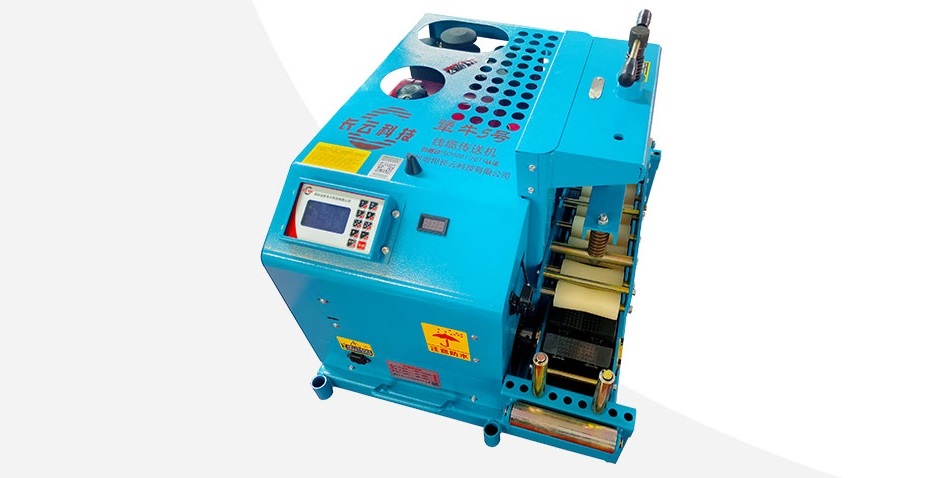
| Oubeili 200 wheel-type cable pusher | 10–100 mm | 10–100 mm |
| Gecko cable tray conveyor | 1–6 cm | 10–60 mm |
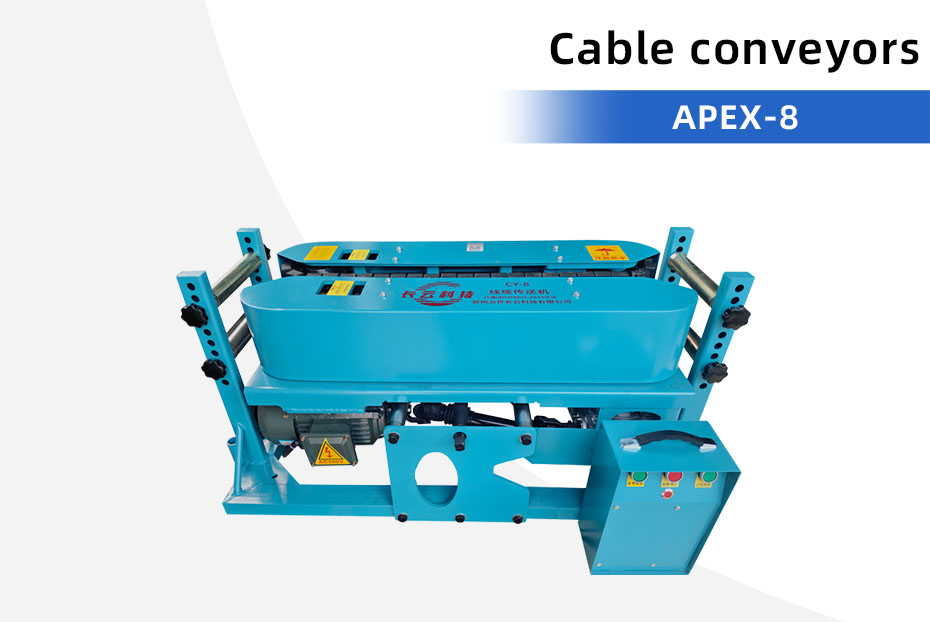
| APEX-8 cable conveyor | 2–24 cm | 20–240 mm |
For illustration, a 50 mm outside diameter is inside all three published ranges. That does not make the machines interchangeable. Jacket suitability, installation resistance, support arrangements, access and controls still need review.
Confirm the current machine configuration and the cable diameter tolerance. Do not assume that a catalogue range covers every special cable shape or jacket construction.
Why does jacket type matter?
The conveyor applies contact force through its drive surfaces. Supply information about the outer jacket material, surface condition and cable construction so the equipment supplier can assess that contact arrangement.
Armoured, screened, flexible and communications cables can have different handling requirements. A machine described for power cable should not automatically be used for fibre optic cable because the diameter happens to fit.
Ask which belt or roller profile is proposed and how the pressure setting is established under the operating instructions. A request for more grip is not a reason to increase pressure without checking cable limits.
Separate machine force from cable handling limits
Machine capability and the cable’s allowable installation load describe different things. A conveyor’s maximum rating does not increase what the cable can withstand. The approved installation method must account for the load and contact conditions throughout the route.
For example, the Oubeili page records an existing traction figure in “kg” and explicitly notes that its force unit and test conditions need confirmation. Do not turn that entry into a verified force rating when preparing a cable compatibility calculation.
Check bending radius and guidance
A cable may fit between the drive surfaces but still be exposed to an unsuitable bend immediately before or after the machine. Record nearby corners, guide positions and entry heights in the enquiry.
The Southwire installation guide discusses cable bending and sidewall-pressure considerations. Use current manufacturer limits for the exact cable; do not apply a universal bending multiplier to every construction.
Where physical access is limited, use our low-clearance cable pusher checklist to review both machine space and the cable path.
What should you send for a compatibility check?
- Manufacturer, cable designation and datasheet.
- Overall outside diameter and any stated dimensional tolerance.
- Weight per metre, jacket material and construction details.
- Allowable installation loads, bending limits and relevant handling restrictions.
- Route sketch with bends, supports, access points and power supply.
Ask for the proposed machine, contact arrangement and any accessories to be identified in writing. Our general cable conveyor selection guide covers the other checks before you compare quotations.
Frequently asked questions
Can I use cable cross-sectional area to select the machine?
It helps identify the cable, but it does not replace the overall diameter and construction information needed for compatibility review.
Is a cable near the top of a machine’s range always acceptable?
Confirm the delivered configuration, dimensional tolerance and operating conditions. The upper limit alone does not establish jacket compatibility or available working clearance.
Will rubber tracks prevent all cable damage?
Damage prevention depends on the full installation arrangement and correct operation. Suitable contact materials do not remove the need to check pressure, support and bending conditions.
Request a model-specific compatibility quotation
Send your cable datasheet for a cable pusher recommendation. Include the route requirements so the discussion covers the installation duty as well as diameter. You can compare our cable conveyors and cable pushers before sending the enquiry.