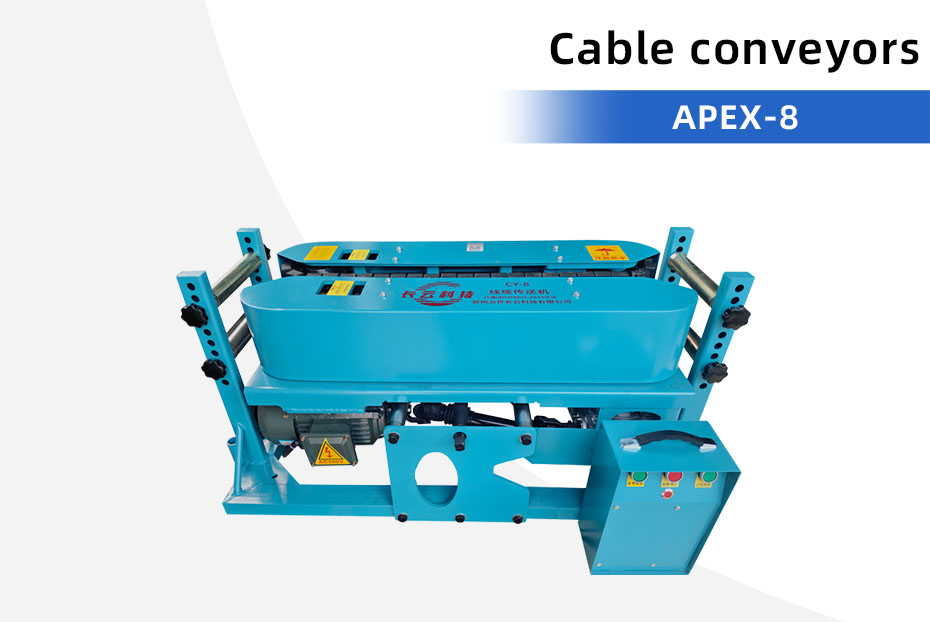
To choose a cable conveyor, match the machine to the cable’s outside diameter, the installation route, the required feeding force, the working speed and the power available on site. Check access and controls before comparing prices. A larger motor or a higher force rating alone does not establish suitability.
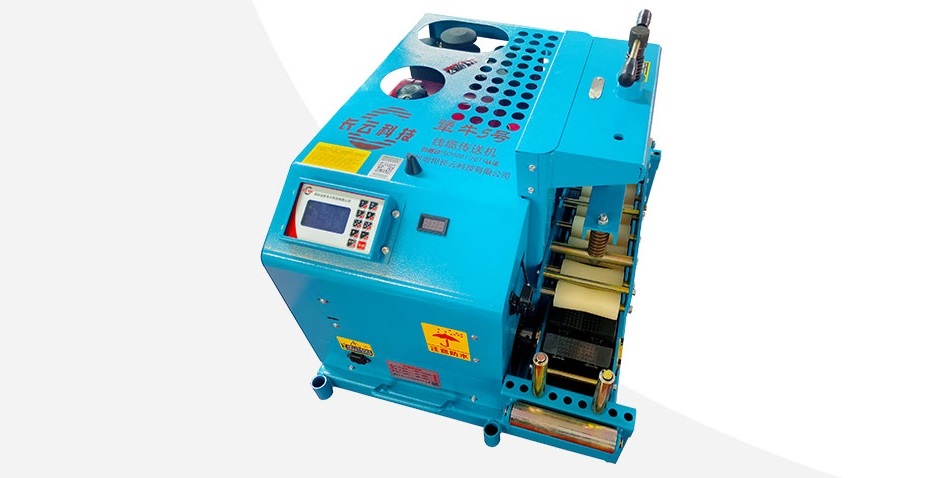
This guide is for contractors buying a cable pusher for power cable installation in trenches, utility tunnels or cable trays. In this context, a cable conveyor grips and advances the cable; it is different from a material-handling conveyor or a cable carrier.
What information should you collect first?
Start with the cable datasheet and a route drawing. Record outside diameter, weight per metre, jacket material, installation length, bend positions, gradients and access points. Obtain the cable manufacturer’s allowable pulling tension, installation bending radius and other handling limits.
These inputs determine the installation method. Two routes of equal length can require different equipment because their bends, slopes and support arrangements differ.
1. Check cable diameter and jacket compatibility
Compare the actual cable outside diameter with the machine’s stated range. Conductor cross-sectional area in mm² is not a substitute for outside diameter in mm. Also confirm that the belt or roller profile and pressure adjustment suit the cable jacket.
A machine that accepts the diameter may still be unsuitable for the cable’s construction or the planned installation. Ask the supplier to review the exact cable specification rather than selecting from diameter alone.
2. Match feeding force to the installation plan
The machine’s force rating describes equipment capability, not the force that every cable can safely withstand. Confirm whether a quoted figure is a maximum or continuous rating, and what conditions apply.
Have the responsible installation engineer assess the route resistance and cable limits. Ask whether a conveyor will work alone, assist a winch or operate at several accessible points. Do not choose a fixed machine spacing from route length alone.
3. Choose speed and controls for the whole system
A useful working speed must suit drum payout, the cable route and the rest of the installation equipment. Variable-speed equipment provides adjustment, while a fixed-speed model may suit a repeatable duty if the full system is compatible.
Check how operators start, stop and reverse the machine. If several units are proposed, request the exact control arrangement, emergency-stop behaviour and supported communication method. A remote control does not by itself prove synchronized multi-machine control.
4. Confirm voltage, phase and site power
Specify voltage, frequency, phase and available supply capacity in the enquiry. An electric motor rating does not confirm compatibility with a particular generator. Have the electrical supply assessed for the selected equipment and its starting requirements.
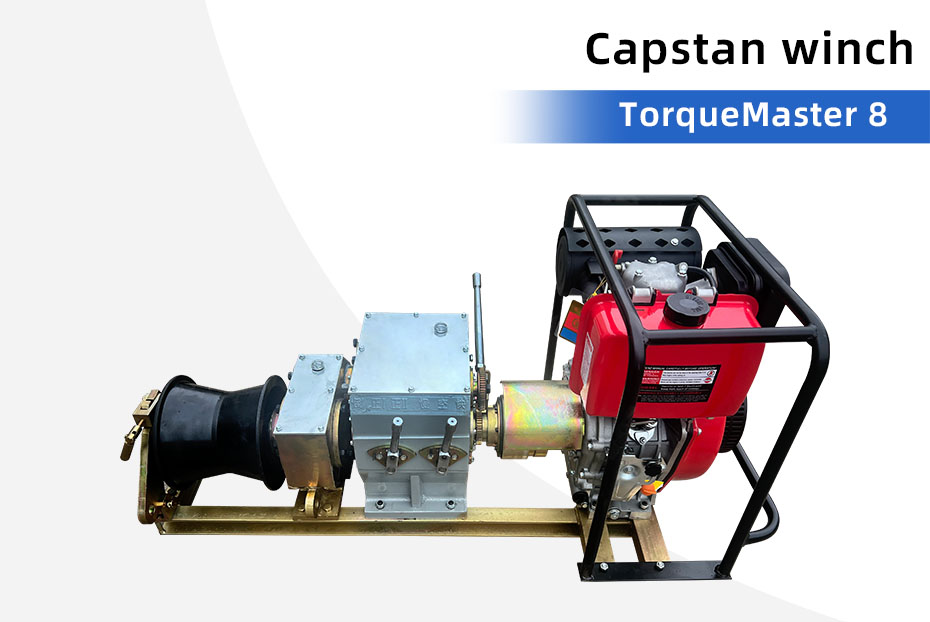
For gasoline- or diesel-generator models, confirm what drives the conveyor and which generator is included. Fuel-powered equipment also needs a site-specific assessment of exhaust, ventilation and applicable site rules.
5. Measure access, working clearance and handling space
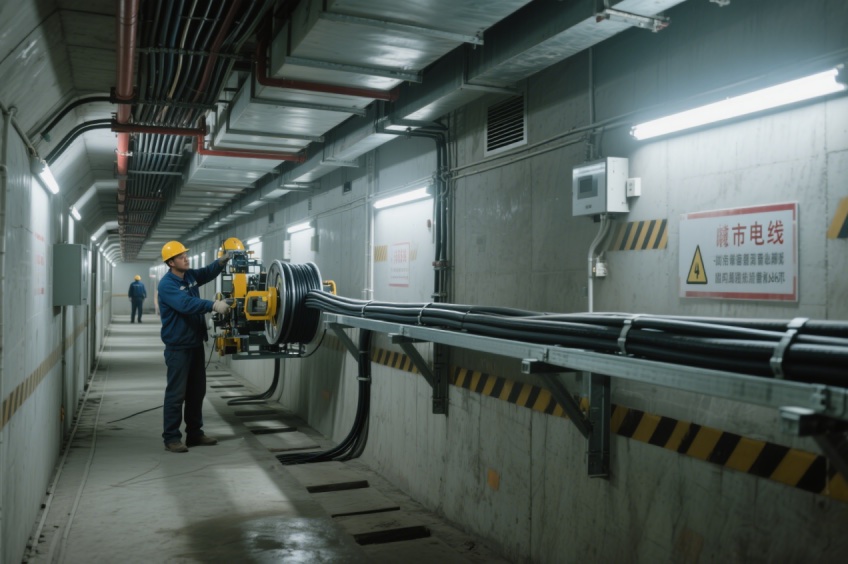
Check doorways, tray spacing, tunnel clearance, floor loading and the space needed to position and service the machine. Include the route used to bring equipment into the work area. A unit that fits at its final position may not fit through the access opening.
For elevated or multi-layer trays, ask for the proposed mounting arrangement and its load requirements. Cable guidance and machine support must be reviewed as part of the installation plan.
6. Compare real product examples
The following published specifications illustrate why machine selection needs more than one number. They are catalogue examples, not approval for a particular pull.
| Model | Listed cable diameter | Listed speed | Selection point |
|---|---|---|---|
| APEX-8 cable conveyor | 2–24 cm | 19.2 m/min | Check the larger cable range, working clearance and 243 kg listed weight against site access. |
| Gecko cable tray conveyor | 1–6 cm | 3–12 m/min | Review the tray arrangement and mounting requirements for the smaller cable range. |
A 50 mm cable falls within both listed diameter ranges, but that overlap does not make the machines interchangeable. Route resistance, mounting, jacket compatibility and handling space still need review. Confirm the current delivered configuration before ordering.
7. Compare the complete quotation
Ask what the quotation includes: machine, controller, connecting cables, accessories, wear parts, packing and delivery terms. Request the operating manual, maintenance requirements and applicable compliance documentation.
A lower purchase price can leave important equipment outside the scope. Compare quotations against the same cable specification and route requirements.
Comparing installation methods? Read our cable pusher vs cable pulling winch guide before choosing the equipment package.
For a closer look at purchasing decisions, use our cable conveyor price and quotation checklist. Compare electric, gasoline and diesel power configurations when the available site supply affects your choice.
Cable conveyor selection FAQ
Is a cable conveyor the same as a cable pusher?
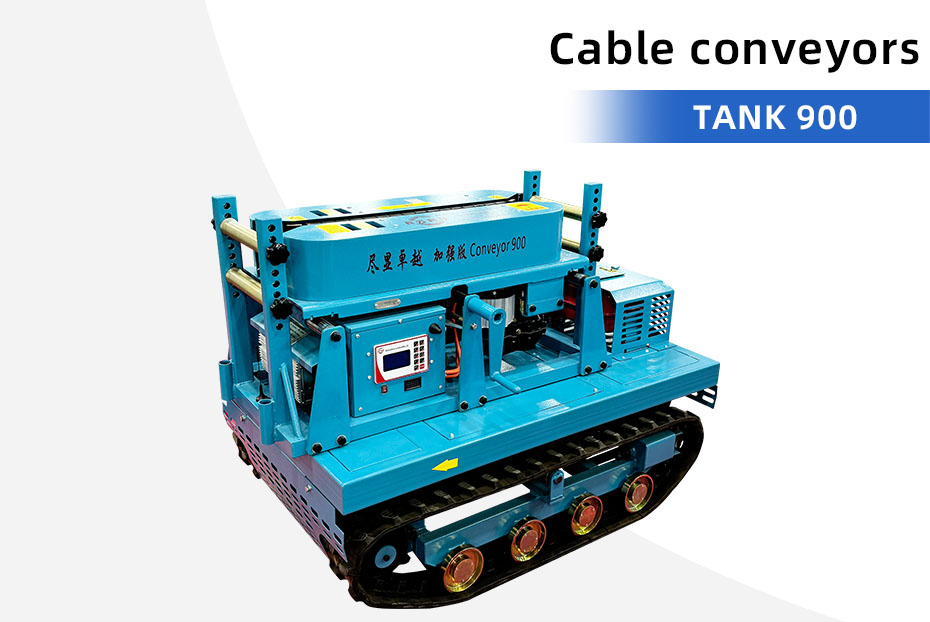
Suppliers often use both terms for machines that grip and advance installation cable with powered belts, tracks or rollers. Confirm the machine’s intended duty and specification; naming alone is not a compatibility check.
Can one cable conveyor handle a long cable route?
There is no universal maximum distance. Cable weight, bends, gradients, support and allowable handling loads determine whether one unit, several units or winch assistance is appropriate.
Should I always choose the highest force rating?
Select sufficient capability for the approved duty, with the controls and cable compatibility the project requires. A higher rating does not increase the cable’s permissible installation load.
Send these details for a cable conveyor recommendation
- Cable datasheet, outside diameter and weight per metre.
- Route length, drawing, bends, gradients and available access.
- Cable handling limits and the proposed installation method.
- Available electrical supply or generator requirements.
- Required quantity, destination and delivery schedule.
Request a cable conveyor selection and quotation. Include route photos so the equipment discussion starts with the actual working conditions. You can also compare our cable conveyor and cable pusher range.
Technical reference: Southwire Power Cable Installation Guide discusses cable installation limits, including sidewall pressure. Use the current limits supplied for your specific cable. This article supports procurement planning and does not replace an engineered installation plan or the equipment manual.