Table of Contents
Cable conveyor planning for a substation or utility tunnel is a clearance problem before it is a machine problem. Confirm the headroom above the tray, the working width beside the trench, the floor or grating load limit, the route the machine takes to reach its position, and the ventilation available while it runs. Only then compare force ratings and speed ranges. A conveyor that performs well on an open road corridor can be unusable four metres inside a cable tunnel.
This guide covers the site checks that decide whether cable conveyors and cable pushers can be used in substations, plant rooms, utility tunnels and multi-layer cable tray installations, and what to record before the first pull. It applies to medium and high voltage cable work as well as fibre and control cable installation. It does not replace the site method statement, the permit-to-work system or the equipment manual.
What makes substation and tunnel work different?
Five conditions separate this work from open trench installation.
Confined working width. Cable tunnels and substation trenches leave little space beside the cable path. The machine, its operator and the cable drum all compete for the same corridor, and there is often no room to step around a running machine.
Restricted headroom. Multi-layer tray installations put the cable path close to the ceiling or to the layer above. Machine height plus lifting equipment plus the operator’s working position must fit in the gap.
Limited floor capacity. Tunnel floors may be drained, grated or built over services. A concentrated machine weight plus cable pull reaction can exceed what the surface accepts, and anchoring into a finished floor is often prohibited.
Ventilation and heat. Include the equipment, people and work duration in the site ventilation assessment. Electrical equipment can still add heat; electric drive does not remove confined-space entry requirements.
Live and adjacent equipment. Substation work happens near energised apparatus. Machine positioning, cable routing and emergency egress must be agreed with the operating authority before equipment enters the site.
Measure clearance and access before choosing a machine
Take measurements at the working position and along the whole access route. Both can rule out a machine independently.
- Height from floor to the lowest obstruction above each proposed machine position.
- Working width between the cable path and the nearest wall, rack or live part.
- Width and height of every door, hatch, stair, ladder and lift the machine must pass.
- Floor or grating load rating, and whether temporary spreader plates are permitted.
- Escape route width with the machine, drum and cable in place.
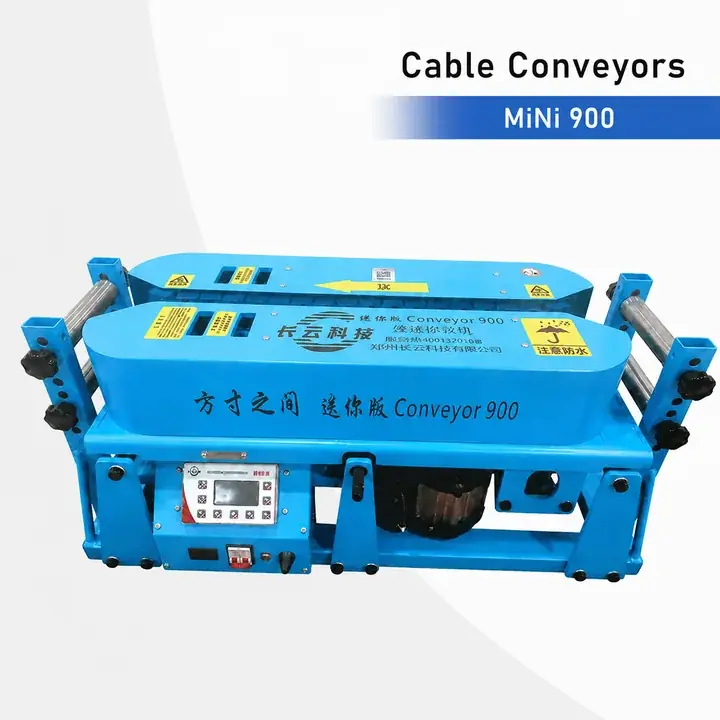
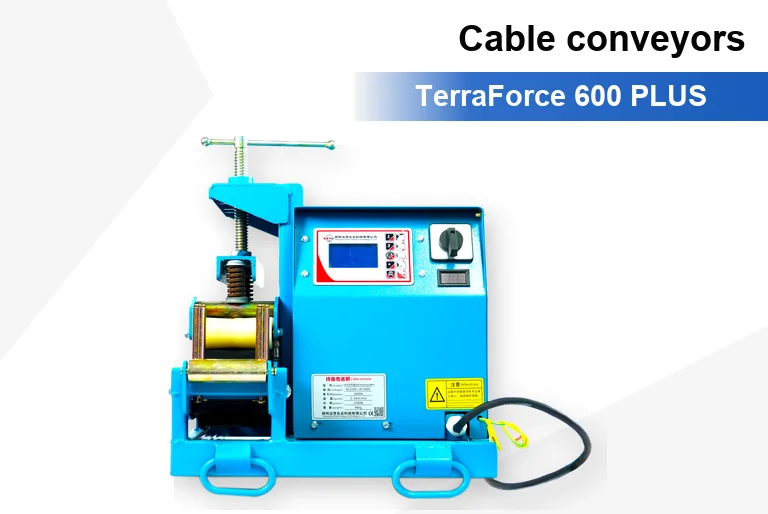
Compare these figures with the machine’s published dimensions and weight. The Mini 900 cable conveyor lists a compact footprint for tray work, and the Gecko multi-layer cable tray conveyor is described for 1 to 6 cm cables with horizontal, overhead and side-mounted arrangements. Ask for the dimensions of the offered configuration rather than the dimensions of the model family. Guards, handles, control boxes and cable guides can add height and width that the outline drawing does not show.
Where the machine must be lifted or lowered into a trench, confirm its delivered mass and manufacturer-approved lifting points with the lifting plan. Do not infer a safe manual lift or lifting attachment from its compact appearance.

Plan machine positions along the tray run
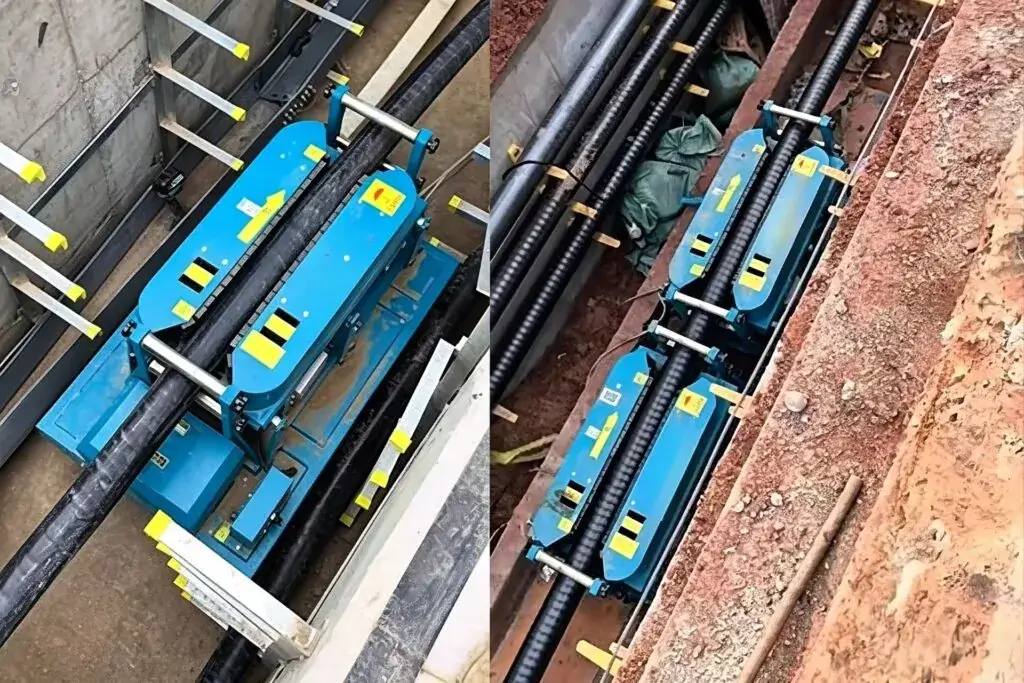
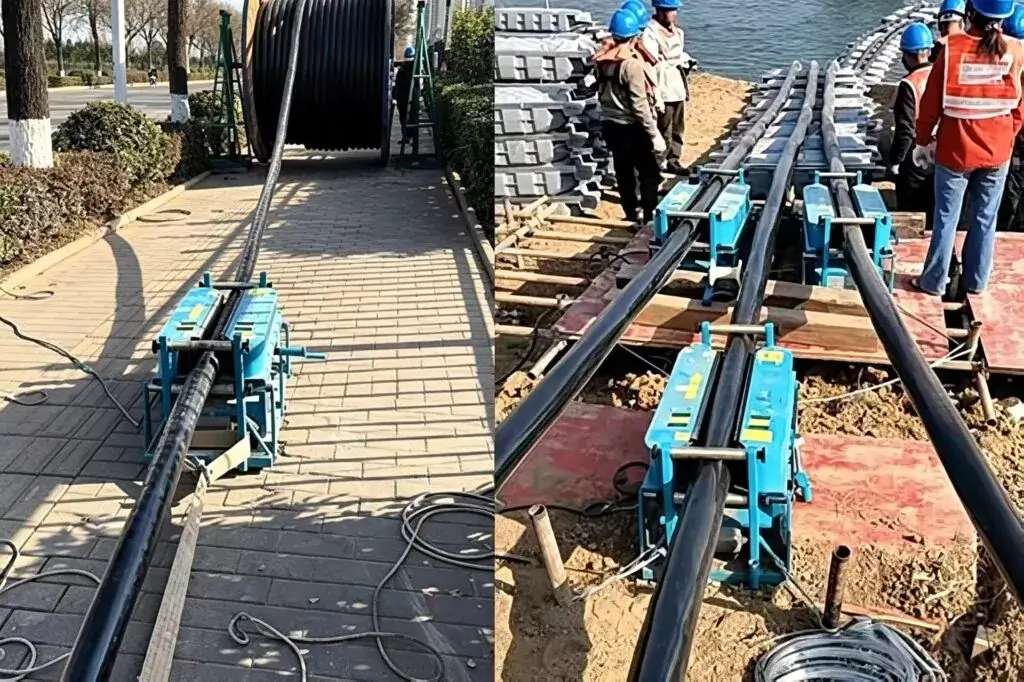
In a tunnel or plant room, useful machine positions depend on route geometry, access and the approved pulling plan, not equal spacing. Review bends and changes in level as design inputs; do not assume every bend needs a conveyor. Confirm straight cable entry, suitable supports and safe operator access at each proposed position.
At bends, the conveyor should sit far enough back that the cable enters the grip straight. A machine placed inside the bend sweeps the cable sideways, which raises sidewall pressure and can damage the jacket. At tray transitions and layer changes, confirm the entry and exit height so the cable does not run over a tray edge.
For multi-layer tray work, the machine may need to sit on a lower layer and feed upward, or be mounted at the side of the rack. Both arrangements change the load path and the access requirement. Our multi-layer cable tray installation checklist covers the arrangement checks in more detail.
Confirm that every position can be reached, set up and vacated without moving the cable drum or blocking the escape route. Positions that cannot be safely occupied are not usable positions, however good the force calculation looks.
Confirm support, anchoring and load spread
A conveyor develops reaction forces against its support. Do not assume ground friction or cable weight will restrain it, even in an open trench. Use the manufacturer’s approved support and anchoring arrangement, checked for the actual site surface and calculated loads.
Ask what reaction force the machine develops at the proposed operating point, and how the site intends to resist it. Temporary spreader plates, ballast, floor-anchored brackets and tie-back points all change the arrangement, and some are not permitted in finished substations. Record the agreed method.
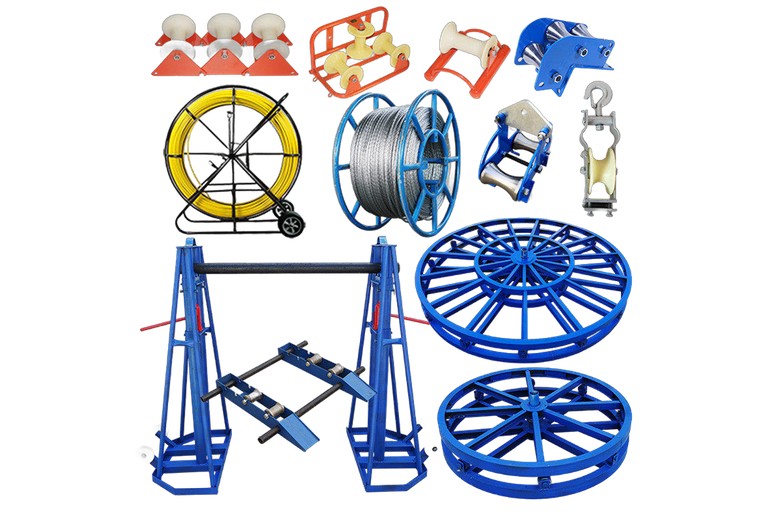
Check the cable support as well. Roller spacing through the run must keep the cable off the floor and off tray edges, and rollers must be rated for the cable weight and diameter. The roller and accessory guide sets out the straight, corner and entry positions to cover.
Control, communication and emergency stop in confined work
In a tunnel, the operator at the far end may be out of sight of the machine and out of hearing of a shouted instruction. The control arrangement has to work without line of sight.
Confirm the communication method for the whole run, the number of people who can stop the pull, and what happens to every machine when a stop is pressed. Agree the stop words before work starts and brief them to everyone on the route, not only the machine operators. A radio check at the start of each shift is cheaper than a damaged cable.
Where several units run together, ask how speed is coordinated and whether a stop at one unit stops the others. Test the sequence with the cable unloaded before the first pull. Related reading: multi-machine remote control planning.
Ventilation, heat and air quality
Machines add heat to an enclosed space and, if gasoline or diesel units are used, exhaust as well. Electric conveyors avoid exhaust but still add motor and drive heat, and every machine adds noise that makes communication harder.
Have the site safety team confirm atmospheric conditions, ventilation and permitted equipment before entry. Keep portable generators and other combustion power units outside and away from air intakes; do not treat open doors, work breaks or machine rotation as controls for exhaust exposure. Stop work if the approved atmospheric or ventilation conditions cannot be maintained.
Dust and debris reduce cooling airflow through motor and drive housings. In older tunnels, dust is often the first reason a machine runs hot. Our guide to cable conveyor overheating sets out the diagnosis order when a unit runs hot in service.
Pre-work checklist for confined installations
| Item | What to record | Who confirms |
|---|---|---|
| Clearance | Height and width at each machine position and along the access route | Site engineer |
| Floor load | Rating, spreader plate arrangement, anchoring permission | Site engineer and facility owner |
| Machine position | Distance from bends, entry angle, tray layer, escape route width | Method author |
| Power | Voltage, phase, capacity and cable route at each position | Electrical supervisor |
| Communication | Radio channels, stop words, who may stop the pull | Supervisor |
| Ventilation | Available airflow, permitted equipment type, break schedule | Safety officer |
Complete the checklist before the equipment enters the tunnel so access, support and control issues can be resolved before the drum is positioned.
Cable conveyor planning FAQ
Can a standard cable conveyor be used in a tunnel?
Only where height, width, floor load and ventilation allow. Low-profile models with a smaller footprint are usually more suitable than full-size road units, and the choice should follow measured clearance rather than preference.
Is a wheel-type or track-type unit better for substation work?
It depends on the surface and the access route. Tracked units spread load better on soft or uneven ground: the Tank 900 crawler cable conveyor is one published example with switchable conveyor and crawler-vehicle modes, while wheeled units are easier to reposition on finished floors. Our wheel versus track comparison sets out the trade-offs.
How do we handle a tray run with no room for a machine?
Ask the installation engineer to review an alternative arrangement from accessible working positions, keeping cable tension, bend radius and sidewall pressure within the cable manufacturer’s limits. Do not force a machine into a position where the operator cannot work or escape safely.
What cable diameter range should we specify for mixed tray work?
Confirm the actual outside diameter of every cable in the installation, not only the largest. A machine with a wide range may not grip small cables reliably, and jacket compatibility has to be checked for each type. Related: cable diameter and jacket compatibility.
Send these details for a confined-space conveyor recommendation
- Section drawing of the tunnel or plant room with tray layers and clearances.
- Floor or grating load rating and any anchoring restrictions.
- Cable list with outside diameter and weight per metre.
- Access route dimensions from the site entrance to the working position.
- Permitted equipment type, ventilation data and shift pattern.
Request a cable conveyor selection for your substation or tunnel project and include the section drawing, so the answer addresses the real clearance rather than a nominal one. You can also compare cable conveyors and low-profile cable pushers in the product range.
Planning references: Southwire substation cable installation guide and NIOSH carbon monoxide precautions. Check the applicable local entry and electrical safety requirements. Use the cable manufacturer’s limits, the delivered equipment manual and the approved site method statement for the actual installation.